

The High Cost of "How We've Always Done It"
There is a dangerous phrase echoing through barns and pastures across the country. It sounds like tradition, but often, it is just an excuse. "This is how we've always done it."
For Cassidy Johnston, a first-generation rancher and founder of JRC Ranch Management & Consulting, that phrase is a warning light. It signals an operation that is running on autopilot, treating a multimillion-dollar business more like a lifestyle hobby than an asset that needs to perform.
In a recent episode of the “Your Ag Empire” podcast, Johnston joined host Jonathon Haralson to dissect the uncomfortable truths about modern ranching. She argues that the industry is being held back not just by markets or weather, but by a refusal to look at the numbers, the people, and the hard reality of what it takes to stay in business.
"We are holding onto it so tightly that we're gonna strangle the thing if we're not careful," Johnston says. "You have to approach your business a little less emotionally if you want it to stay in the test of time and have that legacy to pass on."
The Outsider's Advantage
Johnston didn’t grow up on a legacy ranch, which she views as both a challenge and a superpower. Without the weight of generational expectations, she and her husband, Bert, were free to ask the "dumb questions” that seasoned producers stopped asking decades ago.
Why do we calve in this month? Why are we moving cows now? Why do we use this specific mineral?
"My reaction was, that's not good enough for me," Johnston recalls of hearing the traditional answers. "I realized that sometimes people couldn't answer that for me because they didn't actually know themselves."
This curiosity revealed a stark reality: many ranches don't know their bottom line. They don't know what they need to net per calf to break even. They are operating on instinct and tradition rather than data and strategy.
Profit Is Not a Dirty Word
There is a pervasive idea in agriculture that if you are making money, you aren't working hard enough, or you are somehow selling out. Johnston rejects this entirely.
"I know that profit is a dirty word in the beef industry," she says. "But treating it like a lifestyle is pretty rough... it means that we have a lot of farmers and ranchers who are not as profitable as they could be."
When a producer treats a ranch as a business, everything changes. They become proactive rather than reactive. They keep books—sometimes two sets—and plan for contingencies. They build systems that allow them to pivot when the market shifts or the drought hits.
"The ones who really have that more growth mindset... they are really interested in leaving something better than they found it," Johnston adds. "And it might just be because a well looked-after asset makes them more money. And to me that's okay."
The Invisible Cost of Turnover
While feed and fuel are easy to track on a spreadsheet, Johnston points out a massive, invisible leak in many ranch budgets: employee turnover.
"Everyone says feed costs are our most expensive costs," she notes. "That's true unless you have a lot of turnover."
She asks audiences a simple question: "How many of you have an extra $20,000, $30,000, $40,000 sitting around? Nobody. That's how much it costs you to replace employees every year."
The root cause isn't usually pay. It is housing and management. Producers expect employees to live in substandard housing and work seven days a week without a break, wearing it as a badge of honor. But burnout isn't a business strategy.
"God put us on this earth for much more than cows and plows," Haralson says. Johnston echoes, "This is a dangerous job. There is nothing more important than you coming back here."
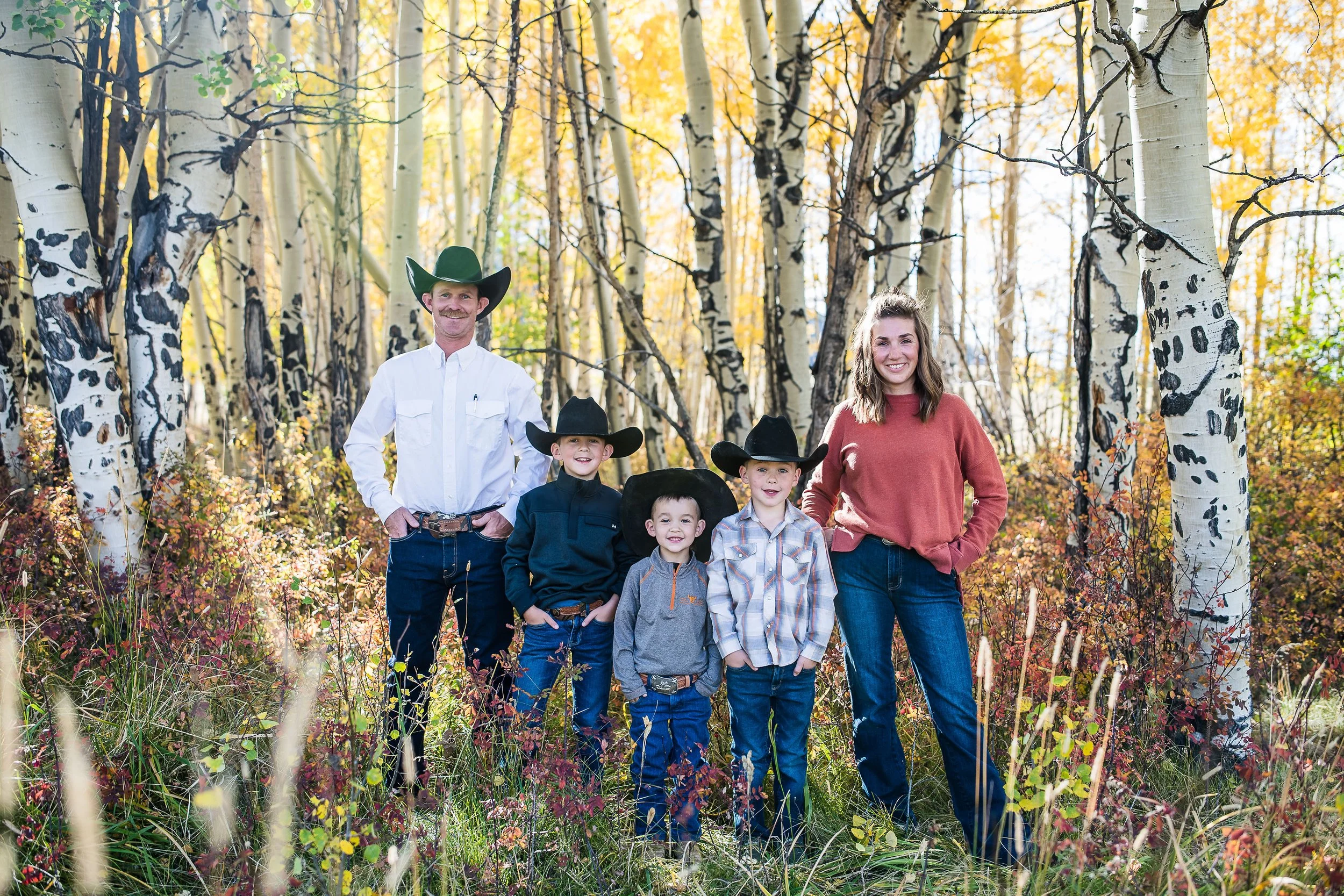
Bert and Cassidy Johnston are first-generation ranchers and founders of JRC Ranch Management & Consulting.
Data Beyond the Spreadsheet
For the producer who hates computers, "data" can feel like a four-letter word. But Johnston clarifies that data isn't just rows and columns; it is observation.
It is tracking trends. It is knowing that your weaning weights are slipping or that your conception rates are holding steady. It is qualitative data, like the stress level of your crew on shipping day.
"If shipping day is the absolute worst day of the entire year and you are stressed and your gather is terrible, can you fix that?" Jonhnston asks. "Can we build a wing on that fence? Can we make a bridge? ... It is quantitative, but sometimes it's also qualitative."
Stop Preaching, Start Helping
Finally, Johnston takes aim at the standard agricultural advocacy playbook: "Share your story."
She argues that consumers don't care about your multi-generational history as much as they care about the value you provide to them. Marketing isn't about making the rancher the hero; it is about making the customer the hero.
"We're not here to preach," Johnston says. "People are tired of being preached at... What do they want to know? What do they need from us? Because those aren't always the same thing."
What Could Better Look Like?
For producers looking to modernize, the path forward starts with an open mind. It means being willing to admit that "better" is possible, whether that looks like better calving rates, better work-life balance, or just better cattle.
"Be open to what better could look like," Johnston advises. "Not because what you're doing is bad, but be open to what better could look like."
It is a shift from scarcity to opportunity.
"You can wake up in the morning and choose to be mad about everything. Or choose to do something about the things that you can do something about."
Listen to the full conversation with Cassidy Johnston on the latest episode of "Your Ag Empire."
