

The Things Leaders Bury
Tyler Dickerhoof spent 25 years operating like a bulldozer. He leveled mountains and cleared fields. He generated $700 million in sales and built a reputation as a man who could outwork anyone in the room. He also left a trail of carnage in his rearview mirror.
Dickerhoof grew up on a dairy farm in northeast Ohio. For a long stretch of his life, he kept that detail to himself. He earned a degree from Cornell University, moved to California, and became a nutritionist for Cargill. He was a high-capacity professional moving through the Central Valley. He learned how to talk, how to sell, and how to win. But the more he won, the more he isolated himself.
"I learned more about leadership from cows that I never understood," Dickerhoof said during a recent conversation on the “Your Ag Empire” podcast. "Often people are like, ‘I don't wanna work with people, so I'll work with cows.’ And unfortunately, it's usually those who are the hardest people to work with as a client."
Farmers often use their work as a shield. They convince themselves that because they work with crops or livestock, they do not need to refine how they manage human beings. They hide behind the tractor glass and the long hours. Dickerhoof knows this because he lived it. He realized working with cattle was the easy part. Managing the person in the mirror was the actual test.
Putting Your Head Down
When Dickerhoof was 14 years old, his younger brother died in a farming accident. He did not ask for help. He did not talk about the weight he carried. He simply put his head down and pushed forward. That became his default response to every challenge.
"I just put my head down and push," Dickerhoof said. "And unfortunately, putting your head down and pushing is a bulldozer. While it will level mountains, it'll level fields, it'll clear an orchard, it leaves carnage. And when that carnage is relationships, you end up feeling like you're alone on an island."
That island is a familiar place for anyone running an operation in rural America. The industry carries a unique emotional toll. Dickerhoof compares the pressure of farming to the pressure faced by emergency room nurses. It is often a matter of literal life or death for the animals, paired with the constant, crushing weight of financial survival. When the markets turn, or the weather fails, or the bank calls, producers retreat.
When fear and insecurity take the wheel, people respond in four ways. They become intense and run over the people around them. They become insensitive and refuse to acknowledge the problems of their employees or family members. They fall into inactivity and wait for the problem to solve itself. Or they isolate completely.
In agriculture, isolation is the default setting. Producers hide their financial realities from their bankers, their employees, and their spouses. They carry the stress internally, convinced if they just wake up earlier and work harder, they can dig their way out of the hole.
"You don't go to your banker, you don't go to your employees and share those things," Dickerhoof said. "The reality is it shows up on your face and how you act every day. Because you're crunching numbers and saying, ‘How do I make this work?’ But yet everyone feels it."
A Better Way to Operate
There is a better way to operate, but it requires producers to do the one thing they hate most. They have to ask for help.
Dickerhoof points to a conversation he had with a Navy SEAL who spent 27 years in the military. Dickerhoof asked him what kind of person actually survives the grueling selection process. He assumed it was the toughest, most stoic men in the program. The SEAL corrected him immediately. The person who survives is the person who links arms with the men next to him. The military weeds out the individuals who try to survive on their own because an isolated operator is a liability in a combat zone.
The same rule applies to running a family farm. The men who try to shoulder the entire burden themselves usually end up breaking. The producers who thrive are the ones who build networks, admit what they do not know, and bring in experts to cover their blind spots.
Dickerhoof remembers a peer in the dairy nutrition space who built a massively successful career. The man was not a brilliant scientist, but he had a flawless Rolodex. He knew exactly who to call when he faced a problem he could not solve. He did not let his ego prevent him from finding the right answer.
"He was not afraid of what he didn't know," Dickerhoof said. "Not one bit."
The Silver Wave
That kind of honesty is rare in agriculture, especially when it comes to generational transitions. The industry is currently facing a massive crisis, often called the “Silver Wave,” as older operators refuse to pass the baton to their children. They hold onto the equity, the checkbook, and the daily decisions because their entire identity is tied to the title of boss. They look at 40-year-old sons and daughters and still see kids who are not ready to lead.
"If I'm holding onto it and I have equity and collateral, that puts the business in a better spot," Dickerhoof explained. "I feel safer being involved, or I want to still have the financial control because that's what I've done."
That refusal to let go drives the younger generation off the family farm. When the patriarch refuses to step aside, the successor eventually leaves to build a life somewhere else. The fix requires the older generation to redefine what their later years look like. They have to find a new role that provides energy and purpose. It might mean managing the finances while handing over the daily operations, or stepping into an advisory role.
Passing the farm down successfully requires honest conversations about energy, skills, and desires. A father cannot force his specific version of the business onto his son. He points to the classic analogy of cutting the ends off a ham just because that is how the previous generation did it, without realizing it was only done that way because the original pan was too small.
"My great-grandfather plowed every acre with a horse," Dickerhoof said. "Should I go plow every acre with a horse? Just because that's what he did. Doesn't make sense."
Innovation is not cheating. It is survival. The next generation might use robotics or artificial intelligence to run the dairy. They might start roadside stands or direct-to-consumer businesses that generate $750,000 in gross sales as a weekend project. If the leading generation wants the operation to last, they have to allow for a different marketplace.
The Things We Hide
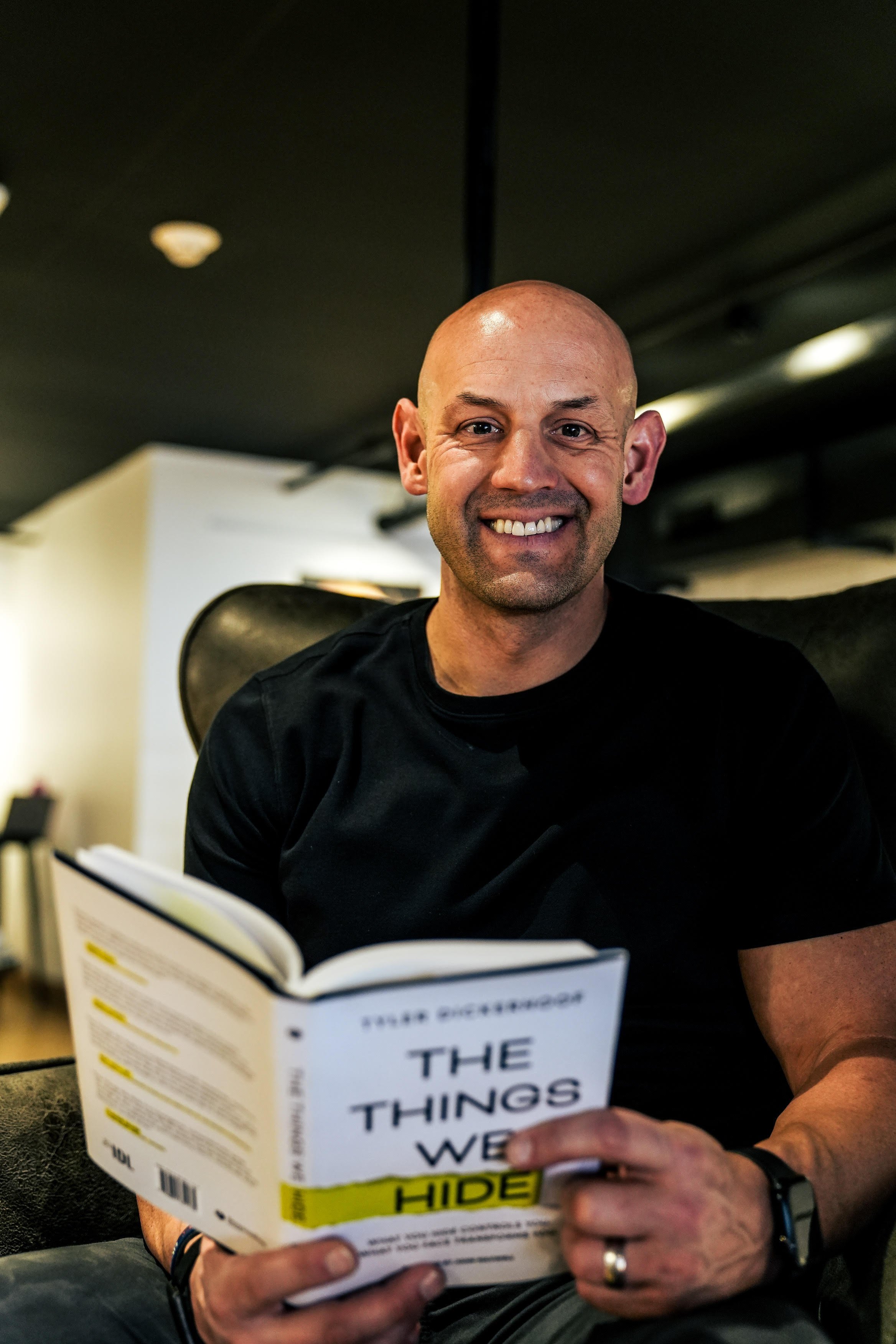
Tyler Dickerhoof is a leadership mentor, entrepreneur, and host of Impact Driven Leader community, and author of the book, “The Things We Hide.”
Dickerhoof wrote a book titled “The Things We Hide” to help leaders confront these exact issues. He built a program to help business owners look at their own mechanics and figure out what is holding them back. He wants operators to understand a farm cannot reach its full potential until the person running it deals with their own internal barriers.
The shift usually happens around age 40. It is the season where men stop trying to build a career and start evaluating their actual mark on the world. They poke their heads above the trench and realize they have been trudging for 20 years without looking up.
You cannot outwork a bad system, and you cannot fix a broken relationship by spending more hours in the tractor. You have to look at the people around you, admit your own shortcomings, and figure out how to move forward together. The hard work is not in the field. The hard work is looking in the mirror, dropping the ego, and realizing you do not have to carry the whole load by yourself.
"Keep it in perspective," Dickerhoof said. "You're living on house money right now. What you do in this life in terms of business or success or farm size…it's great. You may leave a legacy, but it's not everything. We're gonna be called to a way better home one day, and whether you had a bumper crop or a failure crop is not gonna matter in the grand scheme."
The tractors will eventually stop. The land will eventually belong to someone else. The only thing that remains is the way you treated the people who linked arms with you along the way. If you can keep that in perspective, the daily grind becomes a lot lighter.
