

The Farmer's Fight: Breaking the Silence on Mental Health
Kirbe Schnoor knows what it looks like when a crop fails. She grew up on an almond farm in Chowchilla, California, a small town in the Central Valley, watching her parents bet their livelihood on one or two checks a year. She knows the weight of waiting for rain, the tension of a bad market, and the quiet, isolating stress that builds when a family operation is on the line.
Now, as a national ag media personality and host of Farm Her and Ranch Her on RFD-TV, Schnoor is using that background to tell the stories most people in agriculture try to hide. She's traveling the country, sitting in living rooms and riding in pickup trucks, getting farmers and ranchers to talk about the things they usually keep to themselves. And what she's finding is an industry quietly wrestling with a mental health crisis, driven by generational pressure, economic volatility, and a deep-seated culture of silence.
"It's broken families," Schnoor says during a recent episode of the Your Ag Empire podcast. "We've seen, they talk about mental health now being such a huge thing in our industry, and that is real. And it's because it could be a very isolating industry."
The Weight of the Legacy
Agriculture is unique. In most professions, if a business fails, the owner simply moves on. In farming, failure often means losing the land your great-grandfather cleared, the operation your grandfather built, and the legacy your father handed down to you.
"There's a lot of generational pressure with ours because the last thing somebody wants to do is lose great grandpa or great grandpa's farm ranch, or great-great grandma's farm or ranch," Schnoor explains. "I think that you don't see that as common in other industries, and I think that puts a lot of pressure on families and our business and that aids to a lot of family issues or just stresses."
Jonathon Haralson, host of Your Ag Empire and a financial consultant for agricultural operations, sees this pressure constantly. He recently sat in a room with a group of producers ranging from first-generation to seventh-generation operators. One first-generation farmer was agonizing over losing money for the first time in his family's history, terrified of losing the respect of his father and grandfather who were watching him run the operation.
"Now was it him? Or was it the market? Was it the input structure?" Haralson asks. "There's so many things that are there, and we were talking about the weight of that... That is a bigger topic. We could spend a whole day on that."
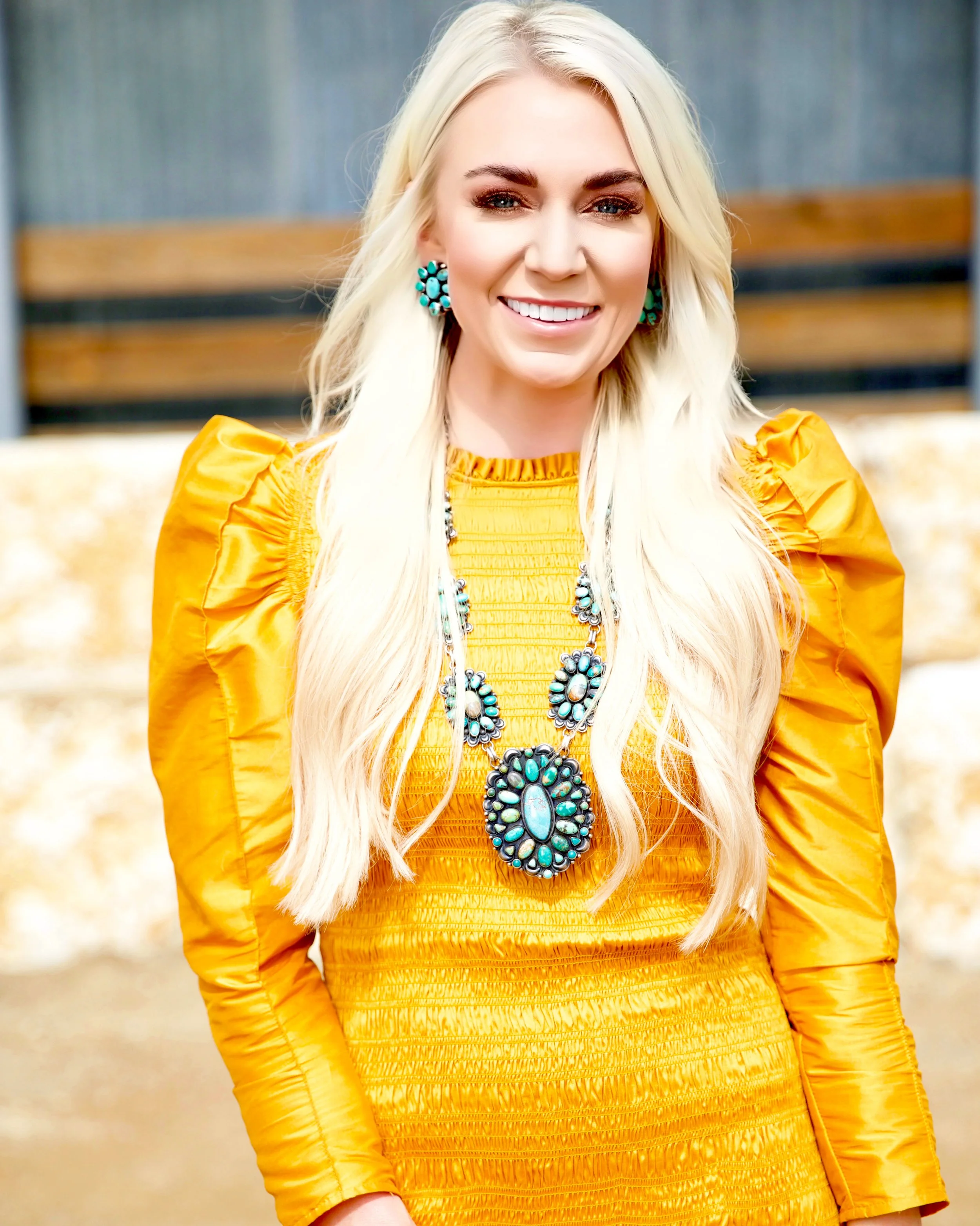
Kirbe Schnoor, host of Dirt Diaries podcast
The Communication Breakdown
The stress of running an agricultural operation rarely stays in the field. It follows producers home, where it often meets a wall of silence.
"Male farmers and ranchers aren't really the, probably the best communicators," Schnoor says frankly. "They aren't always apt to tell their wives a lot of things. And not in a bad way, just they're not constantly communicating because again, this could be an isolating business."
Schnoor watched this dynamic play out in her own childhood. Her father tried to carry the burden alone, believing it was his job as the provider to shield his family from the realities of the business. Her mother, meanwhile, had to fight for information.
"They're not superheroes, they can't be Superman," Schnoor says of male producers. "They can't protect 'em from everything, but they'd like to try. And I've seen my dad like to try, and I've seen my mom just have to bully her way into things so she knows what's going on."
This dynamic often leaves the women in agricultural operations carrying an immense, unrecognized load. They are expected to ride the emotional rollercoaster with their spouses, manage the household, often help with the physical labor or the bookkeeping, and act as the emotional shock absorbers for the family.
"I look at my mom, and my mom was helping my dad in the beginning," Schnoor recalls. "She was driving the tractors. She was out in the fields, and she was also helping a little bit with the books. But then she was also raising a family. She was making sure food was on the table, and she was being a wife. And a part of being a wife was riding the highs and the lows with my dad and being that confidant and listening to him through all that, and then having to be the positive one and take on those stressors."
Finding the Real Story
Through Farm Her, Ranch Her, and her Dirt Diaries podcast, Schnoor is creating a space where these realities can be acknowledged. While the television shows often capture the grit and beauty of the operations, the podcast format allows for deeper, more vulnerable conversations.
"With Dirt Diaries, it gives us a chance for them to just sit in a chair at home and talk about things on another level versus almost feeling like they have to be on," Schnoor says. "You get a different, more vulnerable side of them. They're more willing to talk maybe what was going on that morning, trying to get the kids to school and how terrible that was for them."
The stories she uncovers are rarely simple. She talks about Shanley Farms in Morro Bay, California, where the daughter took over an avocado and finger lime operation after her father died in a freak accident. The transition caused family rifts and forced hard conversations about whether it would be easier to just sell.
She talks about Alex Templeton, a cattle rancher in Kansas who faces intense backlash online for showing the reality of raising livestock, but who continues to advocate for the industry because she knows if farmers don't tell their own story, someone else will.
"When you meet these individuals, and they show you the work that they do, and they're so modest and humble about it, and they give you a glimpse of their life, I just couldn't be more appreciative," Schnoor says. "I know they care about this and they wanna be advocates for it, but exposing yourself on that level is a challenging position to put yourself in."
The Challenge Ahead
The agricultural industry is facing unprecedented consolidation, volatile markets, and an aging demographic. For young people looking to enter the industry, whether in production or in media, the path is steep.
Schnoor frequently hears from young women who want to do what she does. She's learned that many are attracted to the idea of the job, but not the reality.
"I gave you guys this job on a silver platter, and nobody took it," Schnoor remembers telling a group of young women who had reached out to her for mentorship. "I was like, is it because it wasn't dressed up in sequins and looked shiny and nice and fun? It was hard. You've gotta be willing to take the chance to do the thing, to go for it. Show up, be willing to do the work. Leave your ego at the door and grab a seat and put it at the table and sit there."
The work, she points out, looks like work. It isn't always glamorous. It means asking hard questions, listening to difficult truths, and being willing to face criticism from an increasingly disconnected public.
When asked what stories she hopes to be telling five or ten years from now, Schnoor doesn't hesitate.
"I hope I'm still telling the real stories," she says. "I hope I'm still telling the real stories of rural America. How our country was founded. How it's survived generation after generation for all these years. How people put other people first and provide for them in the ways that they have, and how food is still grown and being put on people's plates and tables. I hope I'm providing through this storytelling that connection, whether it's city life to rural America or whatnot. And there becomes just a respect and appreciation through all the differences, but that commonality of, hey, everyone has to eat, and this is how they get to."
