

The House Call Doctor: How One Physical Therapist Is Bringing Healthcare Back to Rural America
Farley Schweighart turned her pickup truck into a mobile clinic. Now she's proving that the future of rural healthcare might look a lot like its past.
There's a farmer somewhere in northeast Arkansas who hasn't seen a doctor in months. He's been running on ibuprofen and willpower, nursing a bad shoulder through planting season because the nearest clinic is an hour away and the work doesn't stop. For Farley Schweighart, that farmer isn't a statistic—he's a patient she met in his own barn.
Schweighart is a physical therapist who ditched the beige clinic walls and insurance paperwork to build something radically simple: a mobile practice that comes to you. She calls it Rural MedEx, and it operates on a model that would be familiar to any country doctor from 1920—house calls, cash pay, and treating patients where they actually live and work.
"I've literally treated people from hay bails to tailgates," Schweighart says, leaning back in her chair during a recent interview. "The key to musculoskeletal health is not an hour in a beige clinic with a bike and a TheraBand. It's understanding your body. It's taking care of the source of the issue and not just the symptom."
The Broken System
Schweighart knows the traditional healthcare model intimately—she worked in it for over 15 years. She's treated youth with eating disorders, worked in workers' compensation clinics, and taught in both doctorate and assistant programs at Arkansas State University. But the constraints of the system eventually wore her down.
"The reimbursement continues to go down," she explains, drawing a parallel to agriculture. "It's a lot like the headlines we have in ag right now. Reimbursement continues to go down, and so often that answer is to put more people in front of you, and that doesn't work for me and how I work."
The burnout was real. On pretty days, she'd sit in her climate-controlled clinic—so cold in Oklahoma summers she wore sweaters—and feel her heart ache. "I could be working my horses or let's just go outside to do what we need to do," she remembers thinking.
But it wasn't just the environment. It was the inability to truly see patients as whole people.
"The constraints of how many people you've gotta see and the amount of paperwork to justify what you did; it really takes a strain on the therapist," Schweighart says. "It's not the interaction, it's not the helping someone. It's a strain of the different constraints."
Access Is Everything
For rural Americans, healthcare access is a four-hour commitment minimum. You drive 45 minutes to an hour to get there. You sit in a waiting room. You get seen. Then you drive back. That's if you go at all.
"I think it's threefold," Schweighart says, explaining why rural people avoid medical care. "It's the hours lost that you need to be doing whatever. I think secondly, it is a fear of not being listened to by who you go see."
She pauses, then shares a story that cuts to the heart of it: "I've had a lot of patients sit across from me on my table and say, 'You're the first person that has listened to me. You're the first person that has told me I can keep doing what I'm doing.'"
During one harvest season, a farmer came in mid-day with debilitating low back pain. He couldn't climb into his combine. "He sat on my table. He said, 'I'm in the middle of harvest. I do not have time to come to physical therapy,'" Schweighart recalls. "And I said, 'I know you don't. Let me do an exam. I've got a plan. We will figure it out.'"
She saw him twice. He felt better. She told him to come back if he needed her. He came back once, briefly, and then got back to work.
That's the model that works in rural America—understanding that the patient across from you has a life that can't pause for three visits a week.
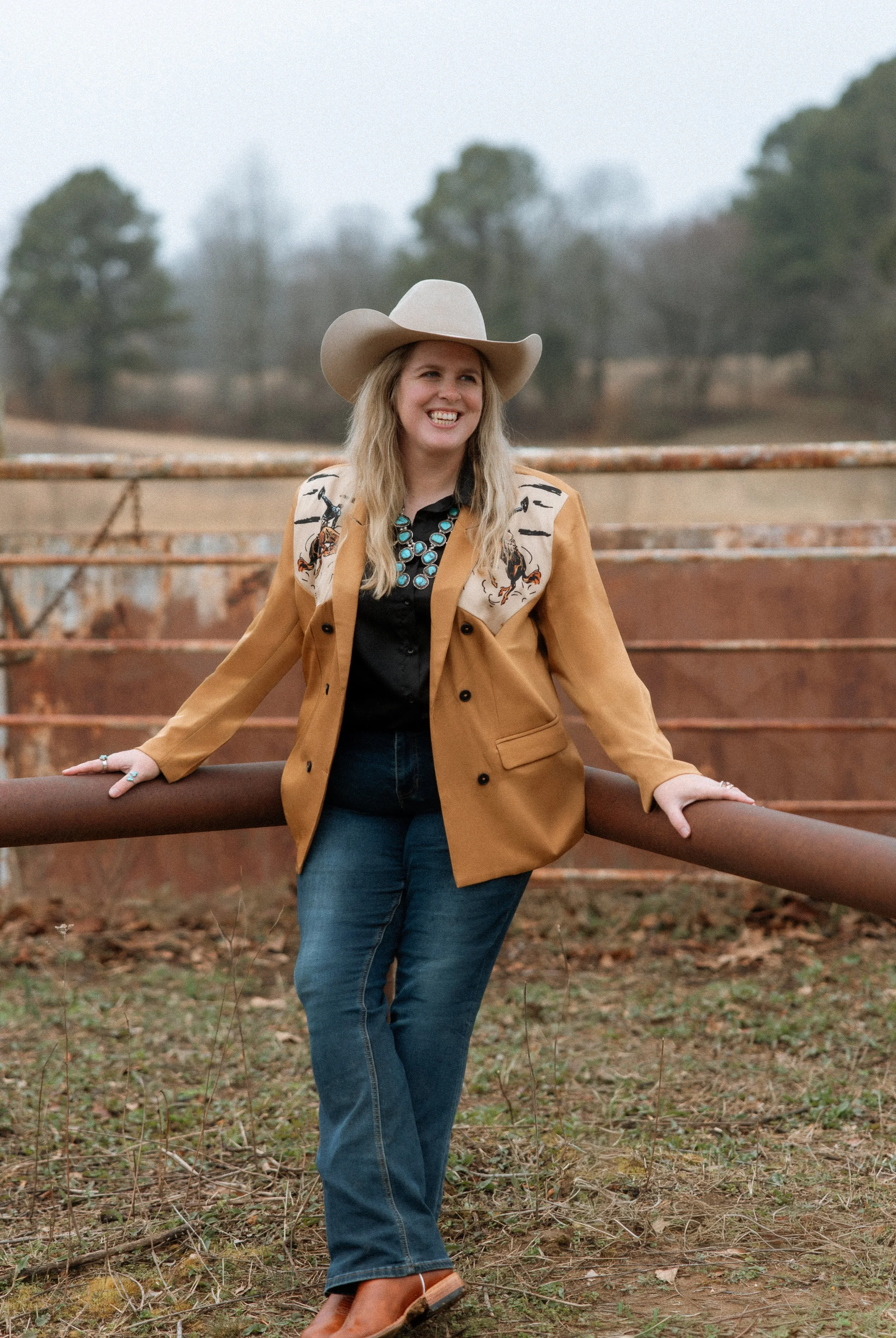
"I've had a lot of patients sit across from me on my table and say, 'You're the first person that has listened to me. You're the first person that has told me I can keep doing what I'm doing.'"
The Road to Rural MedEx
Her path shifted because of a roping injury and a greenhouse. During a summer break from college, Schweighart watched her father, a right-handed ag teacher, attempt to build a greenhouse using only his left arm. He had endured three shoulder surgeries in ten months. Schweighart was the one behind the wheel, driving him to physical therapy sessions she originally thought were a waste of time.
The turning point came when she watched his therapist work. The man did not know the first thing about roping, but he studied the mechanics of the sport. He looked at how a body needs to move in the arena and built a plan to get her father back to the life he loved. It worked. Her father roped for years after that. Schweighart saw the merit in that specific brand of care and applied to Arkansas State shortly after.
Years later, that same focus on mechanics led her back to the barn. Schweighart jokes that she started treating horses to lower her own vet bills. She had a barrel horse with sacroiliac issues, the same problems she felt in her own body. Humans and horses share about 80 percent of the same anatomy, and the transition between species felt natural.
She soon realized that the horse was often a better patient than the rider. In the competitive world of rodeo and horse shows, owners will pay for every new modality a vet offers. They ignore the fact that their own stiff shoulder or crooked seat affects how the animal performs.
"It's a lot easier to do something for somebody else than it is to do something for ourselves," she says. "You'll see the memes about learning how to move better. There is nobody in line. Go get a pill, and there is a long line. It is human nature to look for the easy way out."
Rural MedEx makes the right path more accessible. The practice is cash-pay and mobile. No insurance company dictates how many sessions a patient needs to reach a certain metric. Schweighart views herself more like a mobile mechanic or a vet. A patient might have a flare-up that requires weekly visits for a month, followed by a maintenance schedule every few weeks or months.
The math is simpler than the traditional system. A clinic visit might cost a patient 60 to 100 dollars out of pocket, but the clinic requires three visits a week to keep the doors open. Schweighart charges a flat rate, drives to the farm, and often resolves the issue in fewer sessions. One client treated for migraines realized she had not needed her 250 dollar per dose medication since starting with Schweighart. The treatment addressed the source rather than masking the symptom.
Building a brand in rural America requires putting in the reps. Schweighart recently received a grant from the Rural Gone Urban Foundation to help with marketing. For a therapist used to clinical work, learning to talk about her business was a hurdle. She spent months refining the way she communicates her work to people who are naturally skeptical of a sales pitch.
During a discussion on the Your Ag Empire podcast, Jonathon Haralson challenged her to look past her comfort zone. He pushed for a 90-day plan to expand her reach in Oklahoma, where she is also licensed. Schweighart admitted that while she often feels like she can leap buildings in a single bound, growth requires a small target and consistent action.
At the center of it all is a philosophy grounded in simplicity. Schweighart often thinks of her friend Donna Kay Rule, a champion barrel racer. Rule believes that champions are masters of the basics.
"Whether we are talking about business or roping or PT, it really comes back to that," Schweighart says. "It is simple, not easy. It is not flashy. It is just doing the basics day in and day out. That is where the heart of Rural MedEx is."
Her faith informs the work through action. She believes in doing the right thing by the person standing in front of her and holding space for people to be heard. For the farmer still leaning on a bottle of ibuprofen, her advice is direct.
"It is not too late to get started," she says. "But starting now is better because the path you are on decreases your longevity. Putting something off will bite you further down the road with more time away from what you are passionate about."
Farley Schweighart will keep driving, one farm shop at a time, proving that the best way to move forward is to remember how things used to be done.
