

The Things We Hide: What a Dairy Nutritionist Learned About Leadership After 25 Years of Pushing Through
Tyler Dickerhoof spent most of his career putting his head down and pushing. It was a survival tactic learned young, refined through tragedy, and reinforced by an industry that rewarded grit over vulnerability. For 25 years, he bulldozed his way through obstacles in agriculture, convinced that intensity was the only currency that mattered.
Then one Sunday night in a gym he co-owned with his wife, God told him to stop.
Dickerhoof grew up on a small dairy farm in northeast Ohio, the kind of operation where you learn early that life doesn't pause for comfort. He competed in 4-H and FFA, went to Cornell, then moved to California to work as a dairy nutritionist. He spent five years with Cargill before starting his own consulting business. Later, he shifted into commodity markets and network marketing, a world that forced him to reckon with the one thing agriculture had never required: personal development.
"I learned more about leadership from cows than I ever understood," Dickerhoof says. "It takes trust to lead animals. If you've shown a steer or dairy heifer, you have to build trust in order to lead them, to show them properly, just as much as when you're leading people."
But trust requires vulnerability, and vulnerability was not part of the curriculum.
The Four Walls
Dickerhoof identifies four defensive responses people default to when fear and insecurity take the wheel: intensity, insensitivity, isolation, and inactivity. Agriculture, he argues, rewards the first and excuses the rest.
"When you don't have anything else to do, you just will work harder," he says. "I will get up earlier, I'll work later. I will just push. Whether we understand it or not, that's a survival mechanism."
It's a survival mechanism with teeth. Dickerhoof saw it play out when a young employee at the gym called in sick, then showed up that evening to work out with friends. Dickerhoof's response was harsh. The employee either got with the program or got gone.
A day or two later, sitting in the gym after his own workout, Dickerhoof felt a quiet conviction settle over him. "I hear God say, this is how I deal with things. And what I learned in that season is my intensity is how I dealt with things."
The memory pulled him back to age 14, when his younger brother died in a farming accident. Dickerhoof's response then was the same as it had been ever since: put your head down and push.
"For 25 years, that's how I got through things," he says. "And unfortunately, putting your head down and pushing is a bulldozer. While it will level mountains, it'll level fields, it'll clear an orchard, it leaves carnage. And when that carnage is relationships, you end up feeling like you're alone on an island. And the reality is, the only reason you got to that island is because you put yourself there."
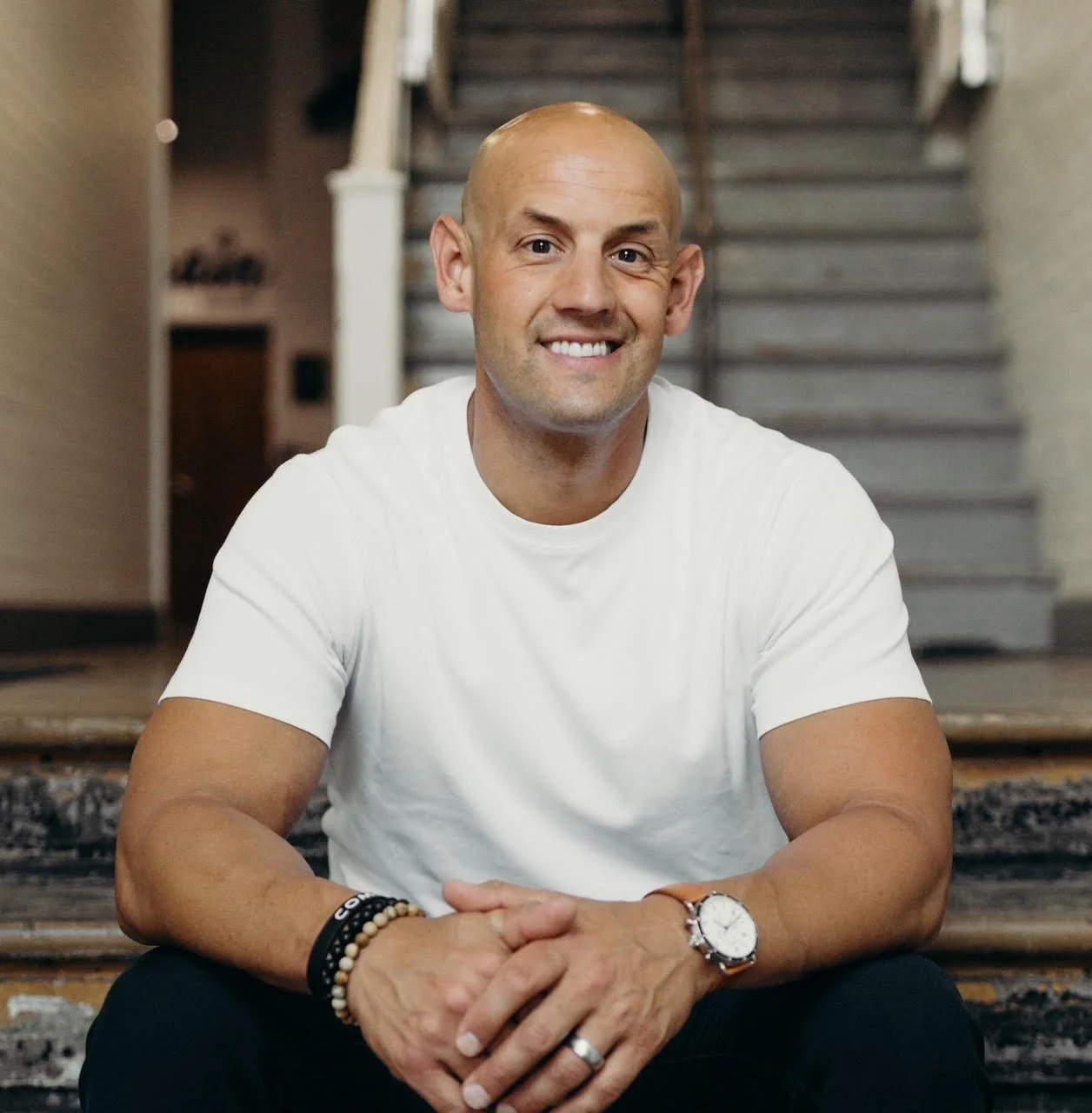
Tyler Dickerhoof is a leadership mentor, entrepreneur, and host of Impact Driven Leader community, and author of the book, The Things We Hide. With over 25 years of experience and more than $700 million in generated business sales, he understands the real pressures leaders face.
The Emotional Toll No One Talks About
Agriculture carries an emotional weight unmatched by almost any other industry, Dickerhoof argues. He recently heard about a 22-year-old dairy farmer in Holland who committed suicide just weeks before his 23rd birthday.
"There's no other industry that has the emotional toll of agriculture except for maybe medical care," he says. "When you think about emergency doctors, ER nurses, the amount of emotional toll that they take, life or death. Sometimes in agriculture, it is life or death with animals. There's not an industry that has as much emotional toll as agriculture. I just don't think there is."
And yet, the default response is isolation. Farmers isolate by function or by action, convinced that working with cows or crops means they don't have to work with people.
Jonathon Haralson, host of the "Your Ag Empire" podcast and a financial consultant who works with agricultural operations, has seen the pattern play out repeatedly. The producers who thrive are the ones willing to communicate, to negotiate, to step into uncomfortable conversations.
"The guys that stand out are the guys that can negotiate a contract," Haralson says. "It's the guys that can put themselves in an uncomfortable situation to find that extra nugget of value."
Dickerhoof points to small dairies in New York, two or three hours outside New York City, that milk 150 cows and pull in significant revenue from roadside farm stands. Some generate upward of $750,000 in gross sales annually.
"They chose to be innovative,"Dickerhoof says. "Hey, we'll still farm the same number of acres. We'll still milk the same number of cows. But man, we're gonna be innovative. Innovation also takes communication to market."
The Identity Trap
For years, Dickerhoof hid the fact that he grew up on a farm. Society looked down on farmers. The narrative was clear: if you wanted to make something of your life, you went to college and got off the farm. Now, nearly 30 years later, the script has flipped. A survey conducted during COVID found that farmers ranked at the top of the most trusted professions in America.
But with that shift comes a new challenge. Agriculture still clings to identity over profitability. The home farm becomes sacred, even when selling it would be the smartest financial move.
Haralson recalls working with a client who owned his home farm three separate times. Each time real estate peaked, he sold. Each time the economy pulled back, he bought.
"You talk to 90 percent of farmers and ranchers, you don't ever sell the home farm," Haralson says.
Dickerhoof identifies the root cause. "When you separate the image, the identity, the emotion from it, what drives that emotion? Our fears and insecurities drive that emotion."
He points to the dairy industry as a prime example. Dairy farmers lose money nine months out of the year, hoping to break even the other three. Yet the idea of selling the herd when prices are high and buying back in when they're low feels impossible.
"Why?" Dickerhoof asks. "The fear, the insecurity of, what if I do that and somebody laughs at me?"
The Succession Problem
The inability to separate identity from operation becomes most destructive during succession planning. Haralson works with clients on succession plans regularly. He always asks the leading generation one question: What does retirement look like for you?
"I have not had one give me an honest answer yet," he says.
Most producers can't look around and see examples of people doing it well. The fear of losing relevance, of losing identity, paralyzes them.
The solution, Dickerhoof argues, is creating a new identity for the retiring generation. Find out what gives them energy and build a role around that.
"The reason why someone hasn't chosen to go to that quote-unquote retirement is because that looks like prison rather than a day at the beach," he says. "If it was a day at the beach, they'd already be there."
He compares it to teaching a 16-year-old to drive. You prepare them early, let them make mistakes, and trust the process.
"My younger son one day was in our side-by-side, had a snow blade on the front of it, clipped the front of my truck, scratched my truck," Dickerhoof recalls. "All right, great. I've done stupid mistakes too. No one got hurt. If you don't have a chance to make the mistake, you'll never learn."
What Navy SEALs Know That Farmers Don't
Through his podcast, Dickerhoof interviewed a Navy SEAL who served 27 years. Dickerhoof asked him who makes it through SEAL training, through BUDs. The answer surprised him.
"The person who doesn't try to do it on their own," the SEAL said. "The person that survives SEAL training is the person that doesn't try to do it on their own. It's the person that links arms beside them."
The worst thing in a combat zone, the SEAL explained, is being next to someone who cares more about themselves than the team. Agriculture operates the same way, though few want to admit it. The producers who link arms, who build networks, who admit they need help, are the ones who survive and thrive.
"One of the greatest peers that I had in my nutrition business was a guy who was a handful of years earlier than me," Dickerhoof says. "What he was phenomenally gifted at is knowing who and when to call. He wasn't exceptional at understanding nutrition, any of those things, dynamics. But he knew who and when to call them. His greatest attribute was his Rolodex. He was not afraid of what he didn't know. Not one bit. Made an amazing career, very impactful career because that's what he focused on."
The Cost of Hiding
Dickerhoof wrote a book called "The Things We Hide." It's a framework for recognizing fears and insecurities, owning how they show up, and reframing the mindsets and beliefs that keep those fears in control. He now runs the Impact Driven Leader community, a year-long program where participants meet weekly on Zoom to work through curriculum, read books together, and learn in real time.
"What I recognize is what was holding me back from being able to impact and lead others was my fears and insecurities," he says. "And when I chose to embrace authentic vulnerability, this is who I am, this is what I'm good at, this is what I can do, and really learn how to harness that as a leadership tool, man, that's when I started to really make a difference in other people's lives."
Agriculture doesn't teach leadership. It teaches technical skills, strategic planning, and how to read a soil test. Universities don't offer courses on personal development or how to become a better human being. The result is an industry full of people who inherited titles without ever learning to lead.
"How do you end up with a title? You're the next one up," Dickerhoof says. "You're the next person in the family. You didn't get there because you were great at leadership. Dad retired, grandfather passed away. All of a sudden you're now the one making all the decisions. That's how it ends up in agriculture."
The opportunity, he believes, lies in the willingness to stop hiding. To admit the fears. To own the insecurities. To link arms with the person standing next to you and say, "I need help."
Haralson has seen it work. The clients who make the most progress are the ones who hit their knees and finally admit they can't do it alone. They need the 30,000-foot view. They need someone to walk them through the numbers, the succession plan, the hard conversations they've been avoiding for years.
"Those are the guys that see the results," he says.
Dickerhoof is 46 now, nearly 47. He's spent a quarter-century in agriculture and business, generated over $700 million in sales, and built a community dedicated to helping leaders stop hiding from themselves. The cow crossing sign behind him is a reminder of where it all started, of the lessons learned from animals that required trust before they'd follow.
The bulldozer is parked now. The carnage has been cleared. And in its place is something simpler, harder, and infinitely more valuable: the willingness to be known.
